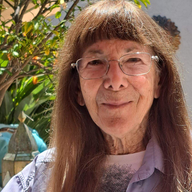
Dr. Eleanora "Norrie" Robbins
Named for Dr. Eleanora “Norrie” Robbins

Dr. Norrie's
Geologist App

54 field instruments in one place. Free for every geologist, everywhere, forever — and it works with the radio off.

54
instruments
0
accounts
0
tracking
$0
forever
01

Start here

02

In the field

03

Measure and interpret

04

Specialist work

05

Records and crew

Samples & custody
Barcoded identifiers, printable labels, an append-only custody chain, lab submission form, QC audit.
Notes & fixes
Anything wrong, awkward or missing — write it here, even with no signal, and send the lot later.
Team sync
Merge crew data with no server and no signal. A union, never a replacement — nothing can be overwritten.
Water moving
Discharge by the mid-section method as a gauging station does it, Manning for a flood you did not see, Darcy through the ground with the seepage velocity that actually carries a plume, and a pumping test read off Cooper and Jacob’s straight line.
Assays and QA/QC
Grade units converted from their exact definitions, standards judged against their own certificate, duplicate precision, blanks that reveal carry-over in the crusher, and results below detection handled honestly rather than as zeros.
Under the microscope
Birefringence from the interference colour by Michel-Lévy, with the chart computed from white light through crossed polars rather than remembered — plus extinction angles, relief and the Becke line, and what a conoscopic figure settles.
Gravity and magnetics
Reduce a station properly — normal gravity on GRS80, free air, a Bouguer slab computed from G itself, terrain — then read a depth to source off the anomaly’s own half width, derived rather than looked up.
Dating a rock
The decay equation used both ways, an isochron fitted to real scatter with its initial ratio as a result in itself, radiocarbon in the convention it is reported in, and concordia for zircon that has lost lead.
Ash and hazard
Erupted volume from isopachs by exponential thinning, the roof load a thickness of ash puts on and what rain does to it, and how far a collapse runs from its own height.
Rock chemistry
Name a volcanic rock on TAS from its analysis — recalculated anhydrous first, as it must be — plot AFM, normalise rare earths to chondrite and read the europium anomaly for the feldspar that left, and measure alteration.
Correlation
Hang several logs on a datum that was once flat and see where a unit thickens or vanishes; decompact a bed back to what it was before burial; and draw the Wheeler diagram whose white space is the time nobody recorded.
Cave survey
Turn a book of shots into a surveyed passage with plan and profile, then close the loop: misclosure as a fraction of the distance walked, and a Bowditch adjustment that gives each leg back its own share of the error.
Ice and frost
Till fabric by eigenvalue — the same tensor the stereonet uses — clast shape and roundness that tell a glacier from a river, ice thickness from the driving stress, how deep the frost goes, and the eight marks that give the ice a direction.
The coast
Wave length and speed from the period at any depth, where it breaks, longshore drift and why a year’s worth is a handful of storms, the equilibrium beach profile, and what a shoreline retreats by when the sea rises.
Resource estimation
Composite an intersection by length rather than by hope, cap the outliers and say what the cap removed, find the grade at which it pays, and watch tonnage and grade trade against each other as the cut-off moves.
Foundations and tunnels
Stress at depth and whether the ground will squeeze or spall, the modulus of a rock mass from its rating with two relations cross-checked, settlement of a footing, how far a tunnel closes, and what can be dug rather than blasted.
Land capability
How much water a soil holds for a crop once the stones are taken out, when to irrigate and by how much, soil loss against the rate soil forms, compaction against the density roots actually stop at, and what the land can carry indefinitely.
Fossils and time
Overlapping ranges into a concurrent range zone, two sections correlated by Shaw’s graphic method where the departures from the line are the hiatuses, how good an index fossil really is, and why the highest fossil you find is never the last one that lived.
Acid rock drainage
Acid-base accounting with the conversion derived from the reaction rather than quoted, the sulphate taken off before it is counted twice, the NAG test beside it, and the ochre colours that read a seep before any meter does.
Heat in the ground
Gradient and heat flow — and why only their product means anything — the heat a granite makes from its own uranium and thorium, the Horner correction a bottom-hole temperature always needs, and heat in place.
Terrain in three dimensions
Satellite imagery draped on real elevation, turned with a finger — with your stations standing at their own height, your traverse drawn across it, and every plane you have measured lying as a disc at its own dip, so you can see whether a contact traces the way the reading says it should. A section along any line, slope and aspect anywhere, and the whole area downloadable for a valley with no signal.
Pumping tests
Transmissivity and storativity from a drawdown series by Cooper-Jacob and by the full Theis solution, with every reading checked against the condition Cooper-Jacob actually requires; the recovery test that needs no observation well; well loss separated from aquifer loss; and a slug test.
Slope stability
A shallow slide reduced to the one calculation worth knowing by heart, a rock plane with its tension crack and the uplift that floats it, a circular slip searched by Bishop and Fellenius together, and the exact depth of water that would bring the whole thing to one.
Geochemical exploration
Where background stops and anomaly begins, by four methods that disagree on purpose — and the robust one finds anomalies the textbook mean-plus-two-sigma misses, because they inflated it. Plus precision from field duplicates, enrichment against crustal abundance, and whether a grid can find the target at all.
Karst and sinkholes
Whether the rock under you can dissolve and how fast, a key that separates a cover collapse from a leaking main, the setback the ravelling geometry demands rather than the rim you can see, and whether a crack is merely widening or accelerating.
Shallow geophysics
Depth to rockhead from a refraction line by the crossover distance and the intercept time both, so the two must agree before the answer is believed; apparent resistivity from a Wenner or Schlumberger array; and the layers each method is simply blind to.
Ore processing
Recovery and mass pull from three assays alone by conservation of mass, the grade the smelter's terms actually pay for rather than the highest one, Bond's grinding energy and what the next halving costs, and whether gravity can separate two minerals at all.
Measuring a face
Height from an angle and a tape, size from a photograph once it has a scale, depth from two viewpoints by parallax, and how to walk a face so the photographs will actually reconstruct rather than fail in the software.

There are no accounts, and there never will be. Nothing you record is sent anywhere — it is held on this device, by this browser, and nobody else can read it. Because of that, the backup file is the account: it carries every station, plane, section and log to a new phone, and it is the only copy that survives a lost one. The Journal keeps it in one press, tells you how many records there are and whether the browser has agreed not to delete them, and reads a backup back again.

Put it on your home screen

iPhone — open this page in Safari, tap Share, then Add to Home Screen. Android — tap the menu, then Install app or Add to Home Screen.

It then opens full screen like any app, with her portrait as the icon. Everything is stored on your phone. No account, no sign-in, and nothing is uploaded — so export your work before you clear your browser data.

Why it is free

Built in her honour, so that every geologist who uses it knows she cares about science — and that it is given freely to all pursuers of truth and science.

Hear when something new is added

New instruments arrive from time to time. If you would like to be told, switch this on — it is the only message this app will ever send you.

What this app counts

So that we know whether anyone is using it, the app sends a random number that means nothing outside this app, the version, which instrument you opened, your language and your time zone. Your position, your trail, your journal, your notes, your photographs and your measurements never leave the phone — they are not offered to the server at all. No names, no e-mail addresses, no IP addresses are kept.

Put it on your home screen
Then it opens like any app, and works with no signal at all.